Do I have To?

Today, I just don’t want to cook. So, lunch was reheated leftover stir fry and rice.

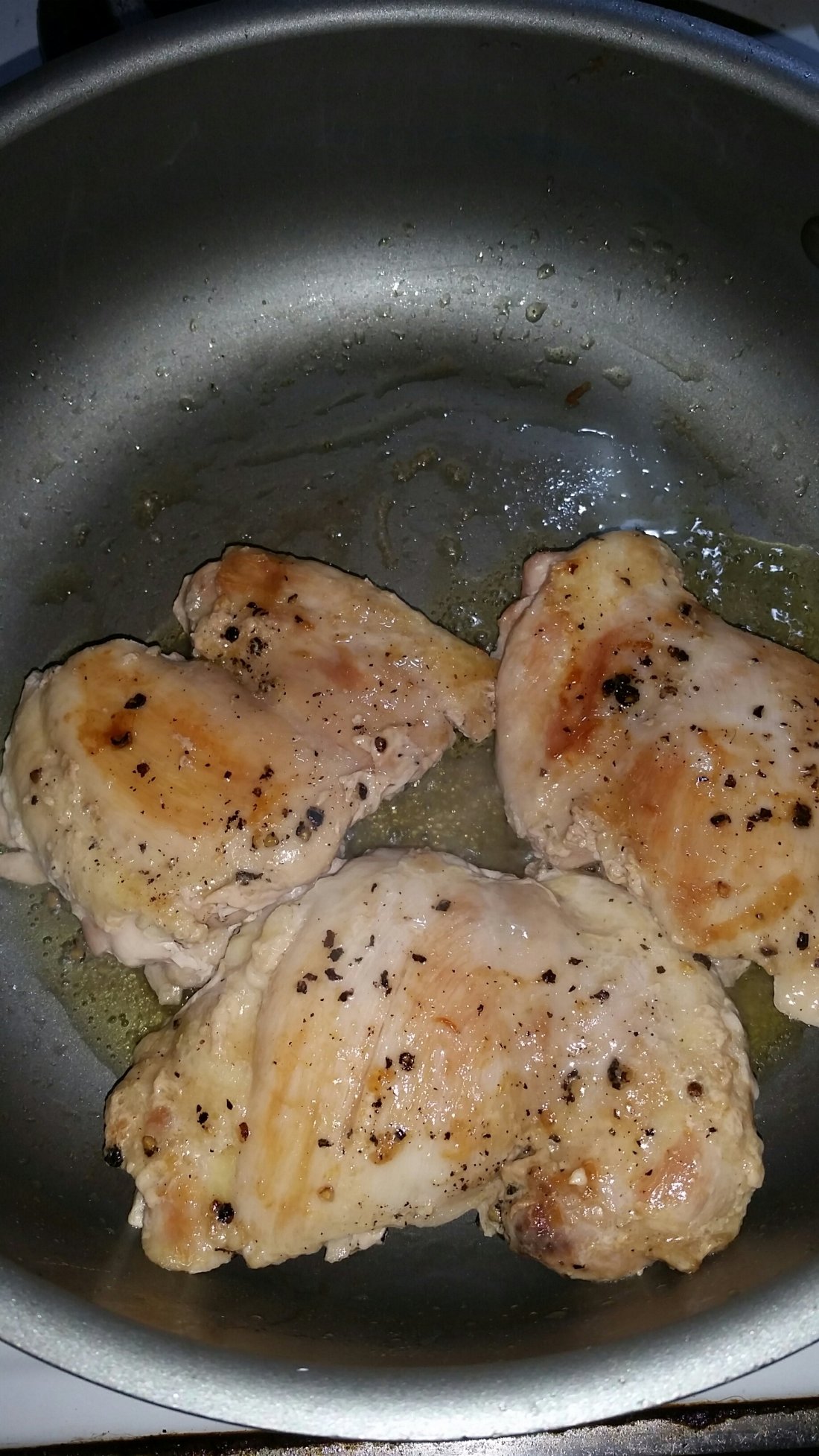
For dinner, I pulled out three of the boneless, skinless chicken thighs I bought yesterday. Defrosted in the microwave, I set for 0.8 pounds and it got them most of the way. Now, they are in the frying pan with a tablespoon or so of olive oil. No, I didn’t measure the oil.

I am sauteing for twenty minutes, I will check them three or four times while they are cooking and check after twenty minutes to be sure that they are done. My spouse got hamburger buns and potato chips. So, chicken sandwiches with potato chips it is.

I am thinking I might do another stir fry tomorrow, if I feel up to it. Some days, and some times during a given day, I just don’t. Still gotta eat, still gotta feed the kid.

To the Store and Back

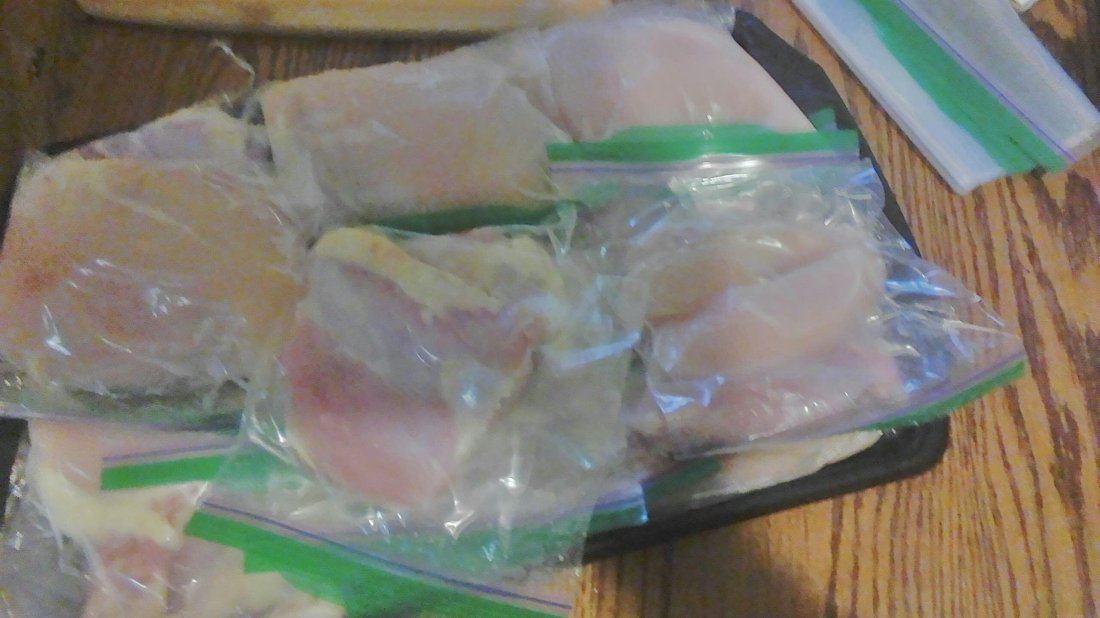
Today, I had a large store run. Four value packs of chicken, plus a bunch more. Everything is in the house and all perishables are in the fridge or freezer. I am taking a break for a half hour or so to get my oomph back. Then I will get out Ziploc bags, my wooden cutting board to use as a work surface and a cookie sheet pan for repacking.

Why did I get so much? I don’t want to have to go to the store again till next month, unless it is for a few veggies or some fruit. One value packs tends to get us through about a week. I have a spouse and a kid, so you might go through more or need less, depending on how many are in your household. Estimate two pounds per adult and a half pound to a pound of protein per kid per week. That is enough for eight 4 ounce servings of meat or meat substitute per week. What about breakfast and lunch? My kid eats at school and my spouse gets and makes his own. So I got some extra protein for lunches and special meals, like chicken Italian sausage for spaghetti or homemade pizza.

Produce depends more on how much everyone eats. Ideally a bunch, getting more every week, but few people eat enough fruits and veggies every day. I try to have them in the house, but fresh goes bad within a week or so, depending on what it is and how it is stored.


Dinner will be stir fry, sauteing carne asada marinaded beef strips with onion, bell pepper and mushrooms. With luck, there will be some left for my next meal.

I will put 1 1/2 cups of long grain rice and 3 cups of rice in the rice cooker. That is a 1:2 ratio of rice to water. Since it takes 30-45 minutes for that much rice to cook, I’ll have time to make the stir fry. I will add 1/2 teaspoon per cup of water, so 1 1/2 teaspoons of salt.

I have a deep frying pan from a Pioneer Woman set to cook the stir fry in. A tablespoon or two of olive oil. I usually cut a couple of rings from an onion, then cut them in half and the halves into three or four places to get large chunks. Then I cut half a bell pepper into strips, then cut the strips into chunks. The mushrooms are already sliced by the store. I will toss the meat and the veggies into the pan and turn on medium high. I set the timer for twenty minutes right away for getting the meat cooked completely. Use the salt and pepper grinder liberally, and go chill or repack for a bit.

  • Start rice in rice cooker
  • Cut veggies into bite size chunks
  • Use slices of meat, chicken tenders/tenderloins, or cut meat into bite size chunks
  • Add healthy oil, meat and veggies to pan
  • Turn burner on to medium high
  • Check and stir about every 5-10 minutes for about 20 minutes cooking time, a few minutes longer or shorter depending of when meat is cooked through
  • After 20 minutes, add fresh garlic, if desired and cook 1-2 minutes
  • If rice is not finished, turn burner to warm or off, put lid on pan
  • When rice is finished, serve with stir fry with rice

Poof, dinner is done

Change the meat, change the veggies, add fruit that can stand cooking, change the rice, or leave the rice out and have just stir fry.


When it comes to learning to cook, the key is practice. The more you do something, the better you get and the better you get at fixing mistakes. Last night, I pulled a pork chop out too soon. I just sliced it and put it back in for a bit. Virtually all cooking mistakes can be fixed. Too much seasoning and cooking until charcoal are among the few that can’t. So, try out a not a recipe, have some fun with it and tell me how it turned out in the comments.

Now, time to quit typing and start doing.

Tenders are two to a bag, thighs and breasts are one to a bag. Carne asada stir fry with rice soon, and a tortilla is my spouse wants his as wraps. I have four thighs set aside to be stuffed tomorrow. Sausages, imitation crab and tilapia are hanging out in the fridge until I am ready to deal with them.

Healthy Fats

Yes, you read that right. Some fat is needed, in moderation. On Weight Watchers, that was 2 teaspoons back when I was on the program. I would not recommend eating a high fat diet without a doctor’s knowledge and approval, but that is my personal opinion.

Grass fed butter is higher in Omega-3 fatty acids than grain fed butter, but I understand it might not be an option. Coconut fat, I have trouble calling something that looks like shortening at room temperature an oil, is one of the healthier solid fats. For things like baking cookies or biscuits, you need a fat that is solid at room temperature to get the finish texture right. To me, that means butter, grass fed butter or coconut fat.

For everyday cooking, look for unsaturated oils. Olive oil, ranging from richly colored and flavored extra virgin to extra light for cooking is my basic oil to grab. Off hand, canola, sunflower and safflower oils all have high smoke points, if you are cooking with high temperatures, use one of these. Olive oil does well at the medium high temperature setting I usually use on the stove. Smoke point is the point at which an oil starts to burn. When it does, it undergoes chemical changes that can turn a healthy oil unhealthy.

For a salad dressing, I want flavor. Experiment, there is a world of nut and seed oils out there today. Since it won’t be cooked, smoke point is not an issue. Remember that 9:3:1 or 3:1 ratio.

For marinades, I tend to grab a sunflower oil in case I decide to cook at a high temperature. I rarely do, but like the option to be there. At it’s core, a marinade is a liquid and oil.

  • Any vinegar
  • Any acidic citrus juice, orange, lemon, lime, etc.
  • Any enzymatic juice, pineapple, papaya, etc.
  • Any alcohol, beer, wine, whiskey, etc.

From there, add flavors. Taste as you go. Use a clean spoon for each taste.

For cooking and baking, I grab olive oil most of the time, but there are plenty of options. Yes, things like cupcakes can be made with olive oil. There is a ratio for cupcakes. 1 part flour to 1 part fat to 1 part sugar to 1 part egg. You can fuss with it, tweaking the ratio up to plus or minus 20%. Use weight, not volume for this ratio. So if 1 large egg is two ounces, 1 part flour would be 2 ounces per egg. An extra egg yolk per egg or two will add to the texture.


Cupcakes

1 whole large egg, plus optional egg yolk

2 ounces oil or melted butter or melted coconut fat

2 to 2.5 ounces sugar

2 ounces all purpose flour or cake/pastry flour

1/4 teaspoon baking powder

1/8 teaspoon salt

1/2 teaspoon vanilla extract

Optional: liquid for texture, flavor or both

Beat the eggs, sugar, oil and vanilla extract together until the color changes.

Mix flour, baking powder and sat together and gently fold into the egg mixture until you cannot see any dry stuff separate from the egg mixture. If the mixture is a bit dry and hard to pour, add 1 teaspoon of liquid at a time until it is very thick, but pours easily. If the mixture is too liquid and runny, do the same thing with flour.

Spray a mini loaf pan or anything that is both safe to go in the oven and bit enough to hold your tiny batch of cake. Pour batter into the pan.

Bake at 350°F, with timer set for 10 minutes.

Poke with a toothpick. If it comes out clean, it’s done. If not, leave in another 2 minutes and check again. Repeat until toothpick comes out clean.

Note:

A single tiny cake like this will take a lot less time to bake than a whole 8 or 9 inch cake you leave in for an hour. Check it early and often!

Using cake or pastry flour instead of all purpose flour gives some extra wiggle room with the texture. Less gluten in cake flour means it can be mixed more than all purpose flour without making the cake tough and bread/muffin like.

Cake does not usually use liquid. If you need it for the texture of the cake, I would suggest water or milk, but any liquid is fine.

If you add some for the flavor it gives, you might want to start with 2.5 ounces of flour instead of 2 ounces. Coffee or espresso is often added to chocolate cake, it can be liquid or powder.


This is a basic yellow sponge cake. Once baked, it should be rich, moist and dense. Since this is a very tiny cake that can be eaten in one setting, it is easy to experiment with before scaling up. An 8 to 9 inch cake would probably use a batch with 4 eggs, 1-2 egg yolks, and 8 to 12 ounces for the remaining ingredients. Unless I added a lot of liquid, I probably wouldn’t go over 10 ounces of flour.


For a fresh fruit cake, we need to learn how to simmer. This just means cooking in liquid that has only a few bubbles that are, ideally, not constant. Boiling has more and constant bubbles. A rolling or roiling boil has the surface constantly covered with bubbles so that you basically can’t see the surface of the liquid through the bubbles.

For the fruit, apples, peaches, basically any solid fruit, not citrus or berries. Cut into small bite-sized cubes. Put them in a sauce pan. Add a tablespoon of sweetener and enough liquid to just cover the fruit. I’d use water, but any liquid that pairs well with the fruit can be used.

Turn burner on medium, simmer until you can just poke a piece of fruit with a fork. Watch, and turn the burner to medium low or low if it is too hot. Set fruit aside.

Use the recipe above, with flour increased to 2.5 ounces. Add 2 teaspoons of fruit juice or liquid that pairs well with the fruit you chose. Check if it is thick and pours well. If not, correct with flour or liquid and check again. Once the batter is right, gently fold the fruit into it.


Ideas for experiments:

  • Add powders such as cocoa powder to the dry ingredients and mix, then fold into the wet ingredients. If you read my post on pasta salad, I folded by scooping from the bottom up to the top while turning my mixing bowl from time to time. If you didn’t, I just explained again.
  • For solid chunks, such as chocolate chips or nuts, lightly coat with the flour mix, then take out. Once the batter is right, fold them into the batter and they will be less likely to all sink to the bottom of the batter and the pan.
  • Cakes don’t usually use liquid. If you are adding for the flavor, increase flour from 2 ounces to 2.5 ounces. Add 0.5 to 1 ounce of the liquid with the egg, sweetener and other wet ingredients. The Flavor Bible can give ideas on what liquids go with what ingredients, one of these days I’ll try adding a dark stout beer to a chocolate cake. When increasing to a full size batch, start with 10 ounces of flour to 4 large eggs, adjust if needed.
  • Other extracts can be used with or instead of vanilla extract. Some, like almond extract have a very strong taste. If your measuring spoons go down that small, start with 1/32 or 1/16 teaspoon and work up. Mint plays very well with most fruits, vanilla plays well with just about everything.


Have fun, and I would love to hear about your experiments in the comments.
About that Pasta Salad…

Well, I tried searching for the blog I started, only to find an established blogger using it. I was unable to figure out how to change the blog name, that I started almost five years ago and never posted on, so… I got frustrated, found a different blogging app, changed the name, and got a domain name through them and I am off with my pasta salad.

I used a small bag of bowtie pasta as the base. If you want to change it to a grain such as rice, to a seed used as a grain such as quinoa, or to a “riced” veggie, go right ahead. I am making an American-Asian inspired fusion type flavor. I am using seasoned rice vinegar so it will get a bit of Asian flavor. You can use any vinegar that will go with your flavor profile. Apple cider vinegar would be great with a more American flavor of pork, yellow mustard, apples, and onions.

A bit of food safety, when tasting to see if you need a bit more of something, use a clean spoon or fork. Otherwise, if it is reused, bacteria can be transferred from mouth to food. As this pasta salad is not cooked after mixing, bacteria in the salad can cause it to spoil sooner.

As long as proper food safety is observed, this pasta salad will last about 3-5 days in the fridge when sealed.

Note: When finishing the dressing and after adding it to the pasta and veggies are two good points to taste. If adding something, like a bit of honey, add a little. You can always add a bit more. Without making more of the vinaigrette base, you cannot take away.

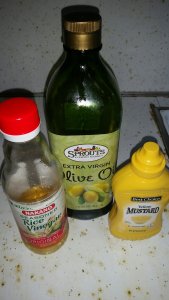
I definitely made more vinaigrette dressing than I needed for the salad. The ratio is either 3 parts oil to 1 part vinegar or 9 parts oil to 3 parts vinegar to 1 part mustard. I should have used 3 tablespoons of my virgin olive oil, 1 tablespoon of the seasoned rice wine vinegar and 1 teaspoon of mustard.

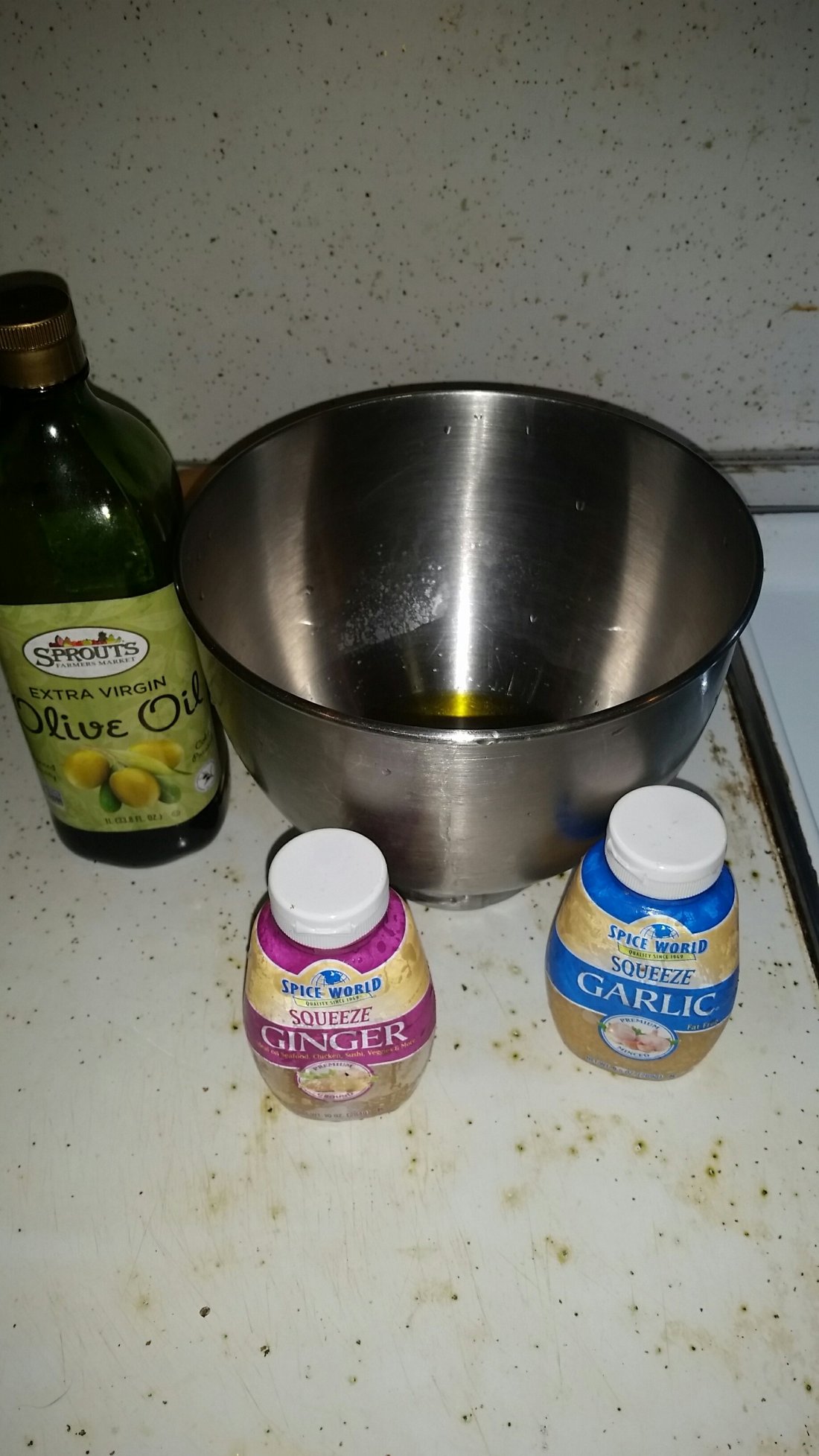
To add a bit of extra flavor, I added 1 part each of minced garlic and minced ginger and let to infuse while I was cooking pasta and cutting veggies. I should have started infusing earlier, possibly last night when I added marinade to my pork chop.

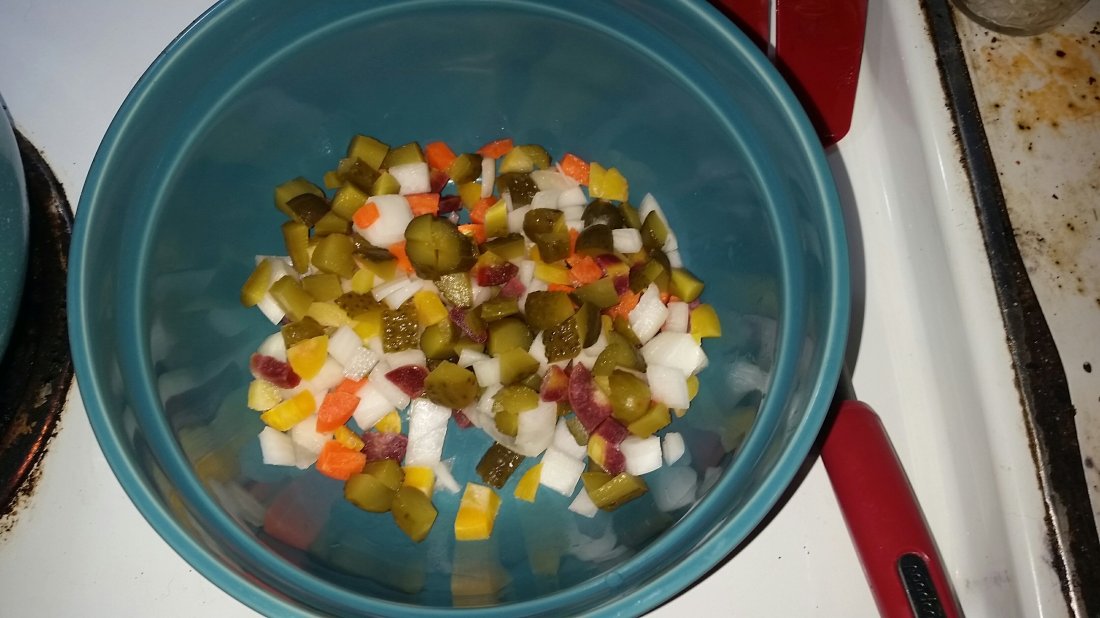
The chopped veggies I used were frozen tri color carrots, fresh onion and sweet girkin pickles. Add as many as you like.

Here is my vinaigrette, waiting to be whisked together. I have a stand mixer and used that to mix the dressing when I drained the pasta in a collander. Note that I used already minced garlic and ginger, and used a mixer to whisk the dressing for me to make things easier. I did use a decent quality knife to chop the onion, frozen carrots and pickles into diced cubes.

I transferred the pasta from the collander to the bowl with the veggies and used a spatula to gently mix them together with the dressing. I folded, scooping through from the bottom up to the top, rather than using a wooden spoon and stirring hard like I was making cookies. The goal is to have enough dressing to coat the pasta and veggies without puddling in the bottom of the bowl.

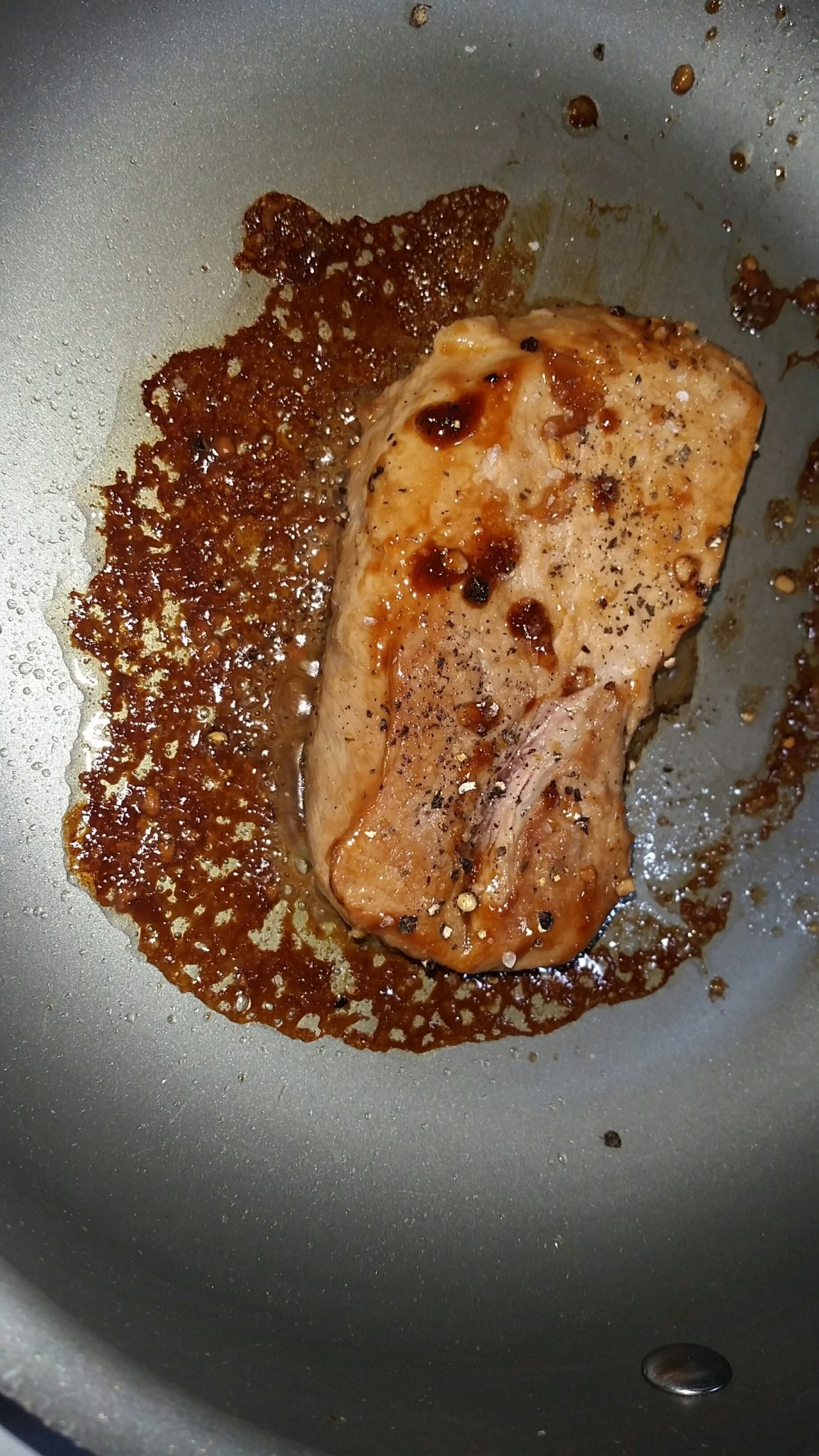
That done, I put my marinaded pork chop into the pan to saute. Basically, sauteing is just frying in a small amount of oil. Since the marinade had oil in it, I didn’t add any. I set a timer for 20 minutes of cooking time, but, you probably guessed, I got impatient. So I diced it up and tossed it back in. A whole lean pork chop or chicken breast takes about twenty minutes to saute when cooked whole. Increase the outside and decrease the inside by dicing it and it takes maybe five to ten depending on the size. Hoisin sauce is a thick, dark, somewhat sweet and rich tasting Asian sauce that I like. That is one of the ingredients in the marinade and is making the pork chop look so dark.

The pork chop finished, it is also gently folded into the salad.

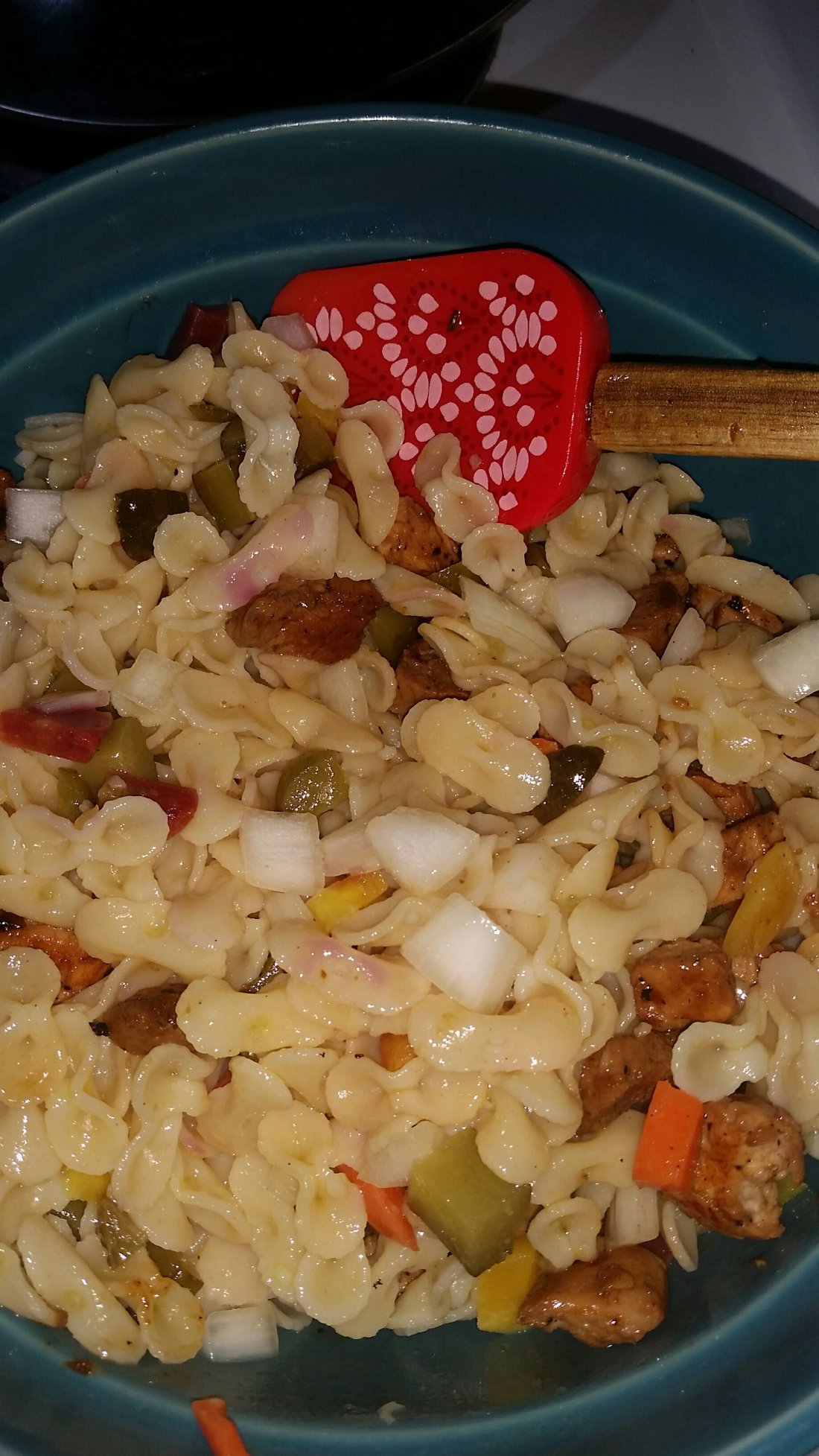
All finished. Num! The best part is as it hangs out in the fridge, the flavor gets better as they blend together.

So, use pasta, grain, or what have you as the base. Add produce, raw, cooked or some one way and some the other, one protein or several, and a vinaigrette dressing. Make a small batch like mine for one to nom on for a few days, or make a large batch for the family potluck, or any size in between. Apples go well in pork or chicken salads, add grapes, raisins, ham or bacon to chicken, go vegetarian and saute tofu, tempeh or seitan make it what you want or can have.


Recipe

Base – pasta, grain, grain substitute

Boil or steam according to directions

Protein – sauteed meat or meat substitute, cheese, nuts can be added

Saute meat or meat substitute. Nuts can be tossed in pan for about 1 minute to toast, if you want to use toasted nuts

Produce – pickle of choice, veggies, fruits can also be added

Can be sauteed, raw or mix of both techniques

Dressing – 9:3:1 or 3:1 healthy oil to vinegar to mustard, if used

Cooking with ADHD – Some Basic Tips

I have ADHD. For some, if not many, this condition makes cooking problematic. For me? A Social Anxiety Disorder can have an impact on shopping, especially managing my anxiety attacks in the store. ADHD affects my ability to be motivated enough to cook from days to day, some days from hour to hour. Having easy to fix meals, meals like pasta salad that I can just dish up and leftovers I can just heat up for a meal when I can barely get up to plate them and heat them in the microwave is a must for me.

If you are one of these, take a deep breath and relax. I don’t plan meals, or use recipes. While I can follow them, I would rather have the creativity and freedom of just cooking. How? By learning techniques and methods such as ratios rather than following recipes to the letter.

I take food safety seriously. I keep food that can be safety eaten raw separate from food that need to be cooked before it can be safety enjoyed. I get perishables in the fridge or freezer as soon as possible after a grocery run. I am planning to make homemade mayo in the near future, using a tutorial on how to pasteurize the raw egg yolks. Both pasteurizing the eggs and adding the oil to the liquid to make the mayo are fussier projects than I want to tackle today.

I would suggest investing in Ratio: The Simple Codes Behind the Craft of Everyday Cooking and The Flavor Bible. The first gives ratios for making things like vinaigrette dressing, mayo, bread, and more. The second provides ideas for new things to try and to try together. I like having them in ebook format, but they come in paper back, hardback and multiple ebook reader formats including Kindle.

When shopping, unless you are trying to add something to your diet or are buying for someone else in the house, if you don’t like it, can’t eat it ow won’t use it, don’t get it. Ask if the impulse purchase is good for you? If it is, get it. If it isn’t, reconsider. Even stuff that is bad for you is fine in moderation, as long as it doesn’t literally make you sick due to food sensitivity or food allergy.

Start with a simple technique or two. Learn it, then go on to another. Make it easy. There is nothing wrong with buying pre prepped veggies, fruits, or anything else, if it will make cooking easier. The same goes for kitchen utensils, gadgets and small appliances. If it will make it easier, get it. If you find something is just taking up space, sell it, give it away or throw it out. Make more than you need. Whether this is every night to feed the family, or when you feel most like working, make extra to have easy to fix meals. This applies to shopping and repacking as well. I buy value packs of meat at the store, bring them home and repacking them into sandwich size Ziploc bags. These go on a cookie sheet in the freezer, at which point I usually forget to take them out to pack the bags into a gallon Ziploc freezer bag. Oh well, I will get better at that.

In my next post, I will make an adaptable pasta salad. Can’t eat gluten? Just substitute a grain, seed used as grain or a “riced” vegetable as the base of the salad. It would work as a rice salad, a quinoa salad or a riced cauliflower salad just as easily. I think I’m ready to advance the laundry and make some pasta salad to munch on for a few days. I’ll be back soon.